
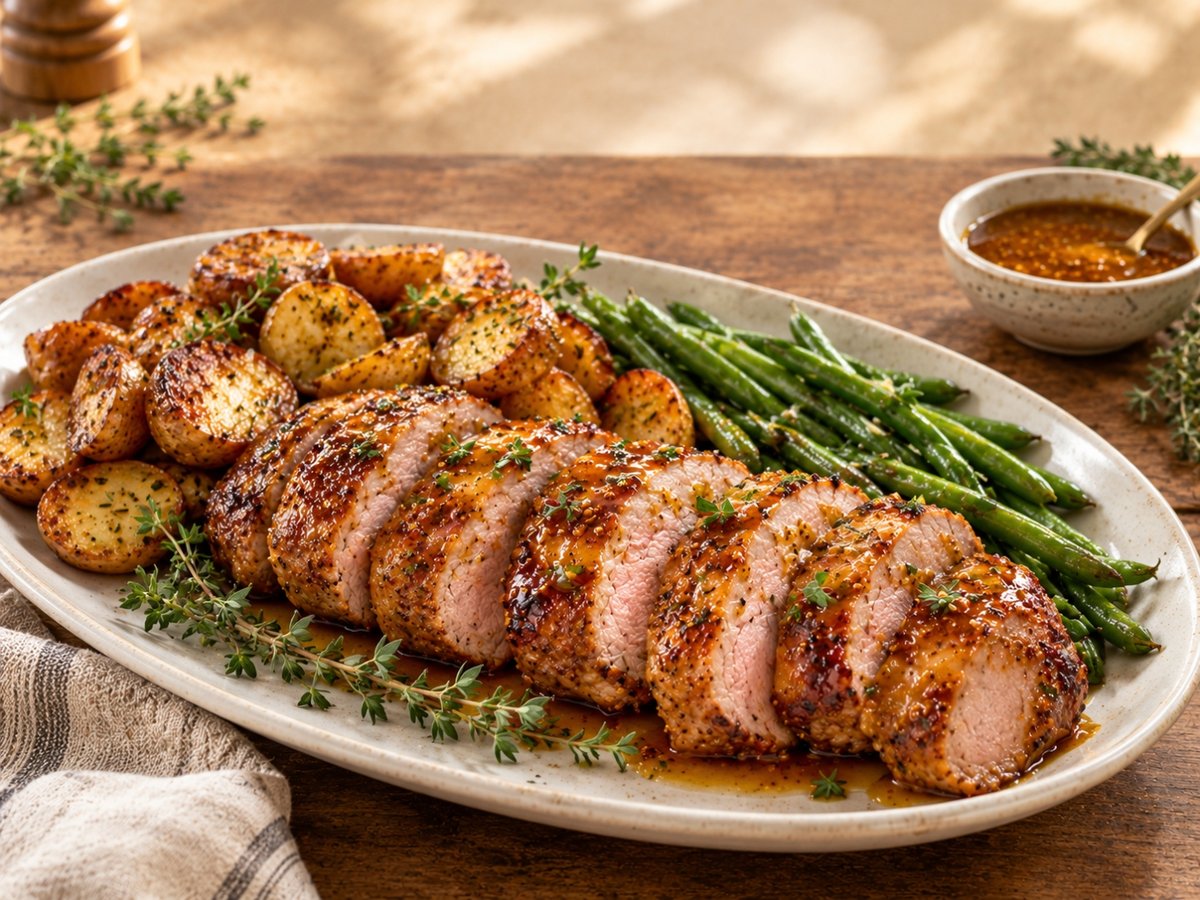
Maple-Glazed Pork Tenderloin
Maple-glazed pork tenderloin is a useful centerpiece when you want a roast-style dinner without a long cooking time. Dijon mustard balances the maple syrup, while garlic and thyme add savory depth.
Pork tenderloin is lean, so the main goal is to avoid overcooking. A thermometer gives a more reliable result than relying on time alone.
Recipe overview
- Servings: 4
- Estimated preparation: 10 minutes
- Estimated cooking and resting: 30 minutes
- Estimated total: 40 minutes
- Equipment: Ovenproof skillet or roasting tin, food thermometer
Ingredients
- 500–600 g pork tenderloin
- 1 tablespoon olive oil
- ¾ teaspoon fine salt
- ½ teaspoon black pepper
- 2 tablespoons maple syrup
- 1 tablespoon Dijon mustard
- 1 teaspoon wholegrain mustard, optional
- 2 garlic cloves, minced
- 1 teaspoon fresh thyme leaves or ½ teaspoon dried thyme
- 1 tablespoon apple cider vinegar or lemon juice
Instructions
- Heat the oven to 200°C/180°C fan/400°F.
- Pat the tenderloin dry. Rub with oil, salt, and pepper.
- Mix the maple syrup, both mustards, garlic, thyme, and vinegar in a small bowl.
- Heat an ovenproof skillet over medium-high heat. Sear the tenderloin for 2–3 minutes per side until lightly browned.
- Brush or spoon about half the glaze over the pork.
- Transfer the skillet to the oven and roast for approximately 15–20 minutes, depending on thickness.
- Check the internal temperature at the thickest point. Remove at 63°C/145°F and rest for at least 3 minutes.
- Brush with the remaining glaze, slice, and serve with the pan juices.
Cooking tips and substitutions
- If two tenderloins are used, allow space between them for even browning.
- Use honey instead of maple syrup if needed, though the flavor will be less distinct.
- Add a pinch of chili flakes for a spicier glaze.
- If the glaze begins to darken too much, cover loosely with foil for the final minutes.
Serving suggestions
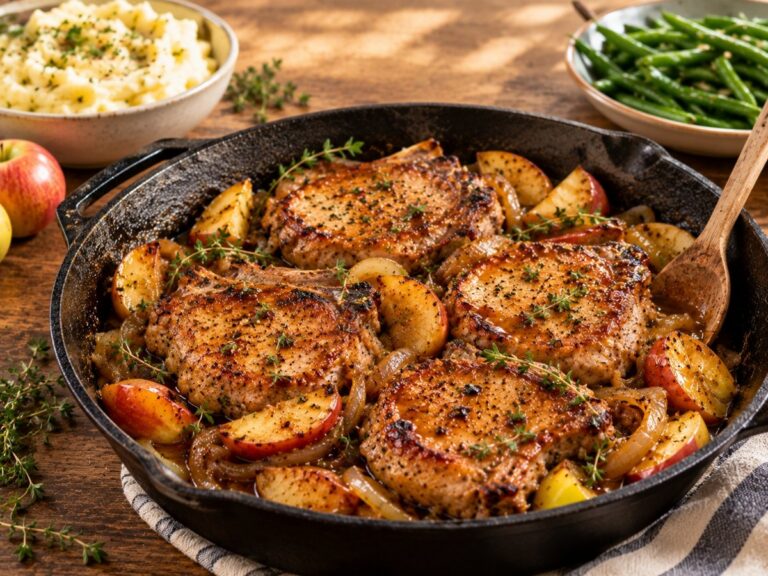
Serve with roasted potatoes, green beans, or a crisp salad. For another pork dinner, try Pork Chops with Apples and Onions.
Use a thermometer to check doneness: FoodSafety.gov safe cooking temperatures.
One Comment